Always on call
Rescue Squad provides life saving, first aid and education to Yadkin community
By Mike Danahey
As Chief of the Yadkin County Rescue Squad & EMS Jeff Hinshaw oversees a truly Southern entity.
“Across the United States organizations like ours are pretty much unique to Maryland, Tennessee,
Virginia, North Carolina, South Carolina, Alabama and Georgia,” Hinshaw said.
Their history dates back to 1928, when Julian Wise formed the all volunteer Roanoke Life Saving and
First Aid Crew, Hinshaw said. Wise had been inspired to do so after witnessing two men drown in 1909 and
vowing to do what he could to prevent such deaths.
Roy Kane was a member of the initial crew in Roanoke and went on to form the first rescue squad in
Winston-Salem in 1937, then the first rescue squad in Elkin in 1941, bringing the concept to North
Carolina. That group disbanded in 2013.
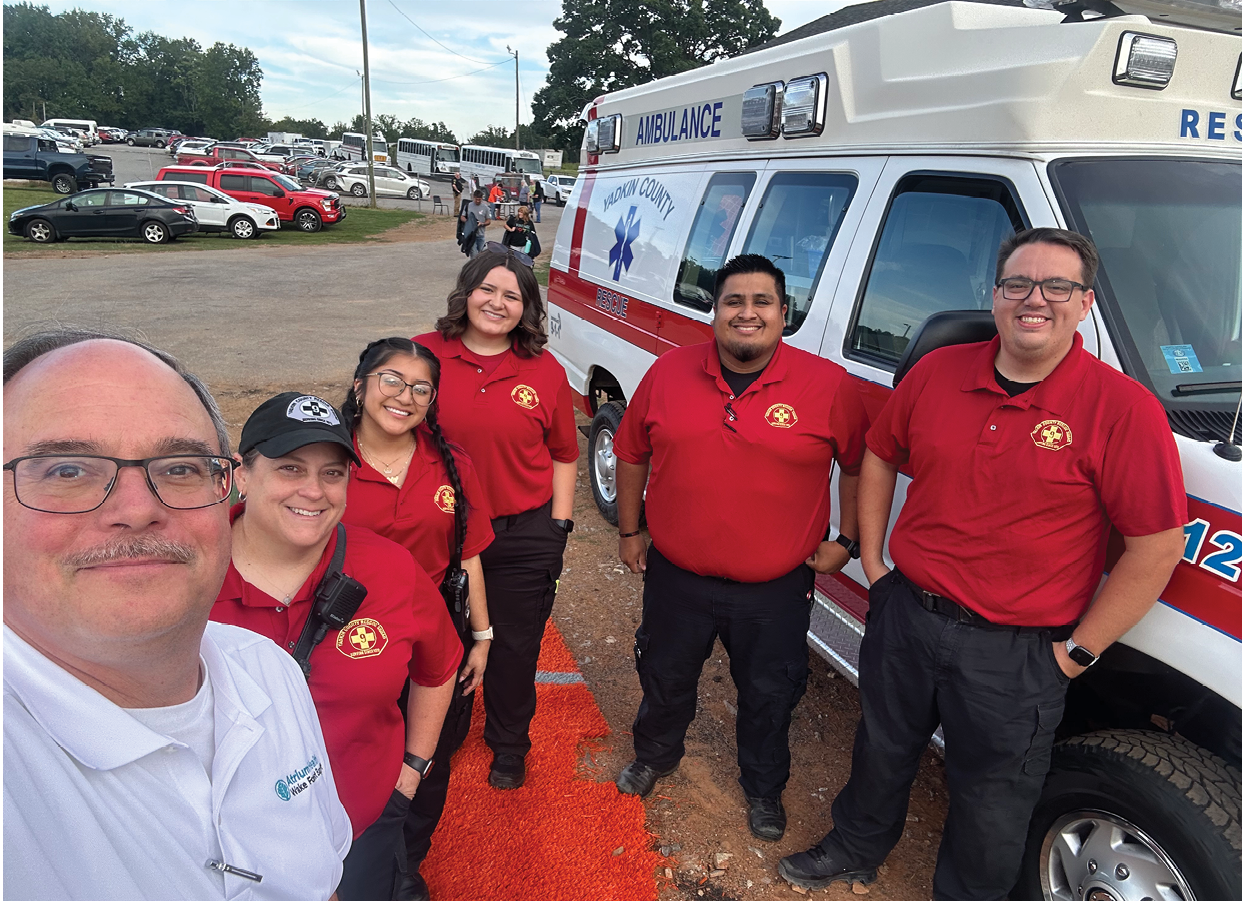
Yadkin County Rescue Squad & EMS has been around for nearly 52 years and currently has 40 members, with
six part time paid employees for daytime coverage and all other time volunteered, including his own,
Hinshaw said.
“The squad started in September 1973 and predates Yadkin County EMS, which started in July
1978,” he said.
On emergency calls, the Rescue Squad works in a tiered system with the Yadkin County Volunteer Fire
Departments and Yadkin County EMS to serve a 336-square-mile, mostly rural, area with a population of
about 36,000. Coordination is of the utmost, as the nearest hospital is outside the county.
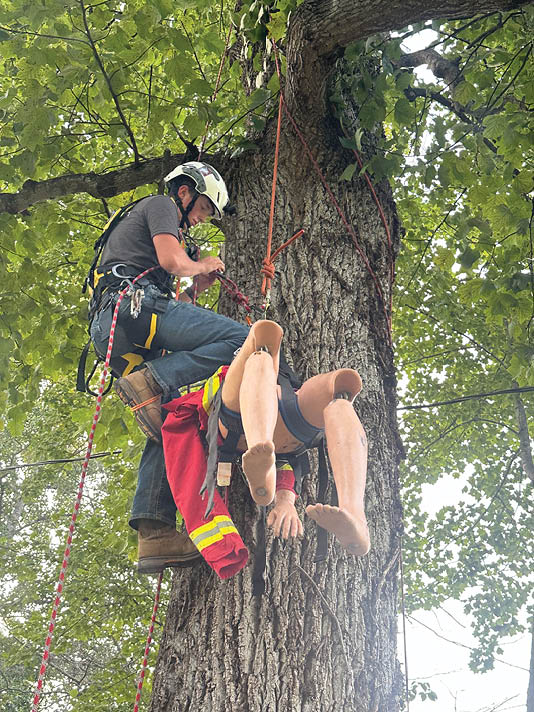
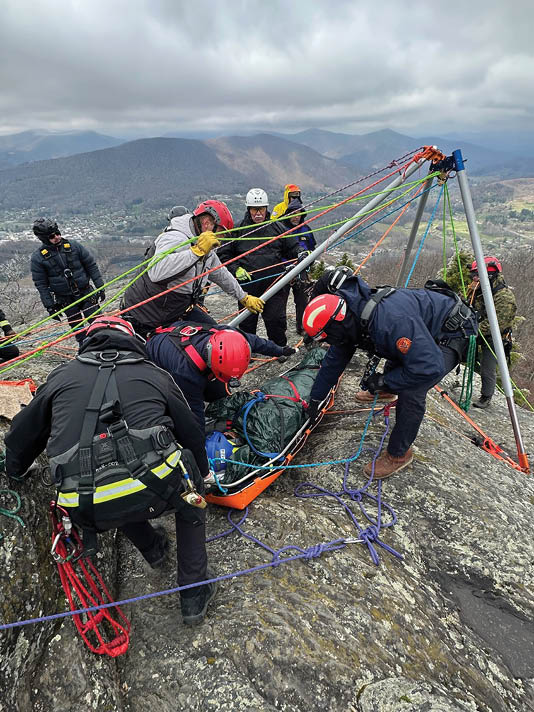
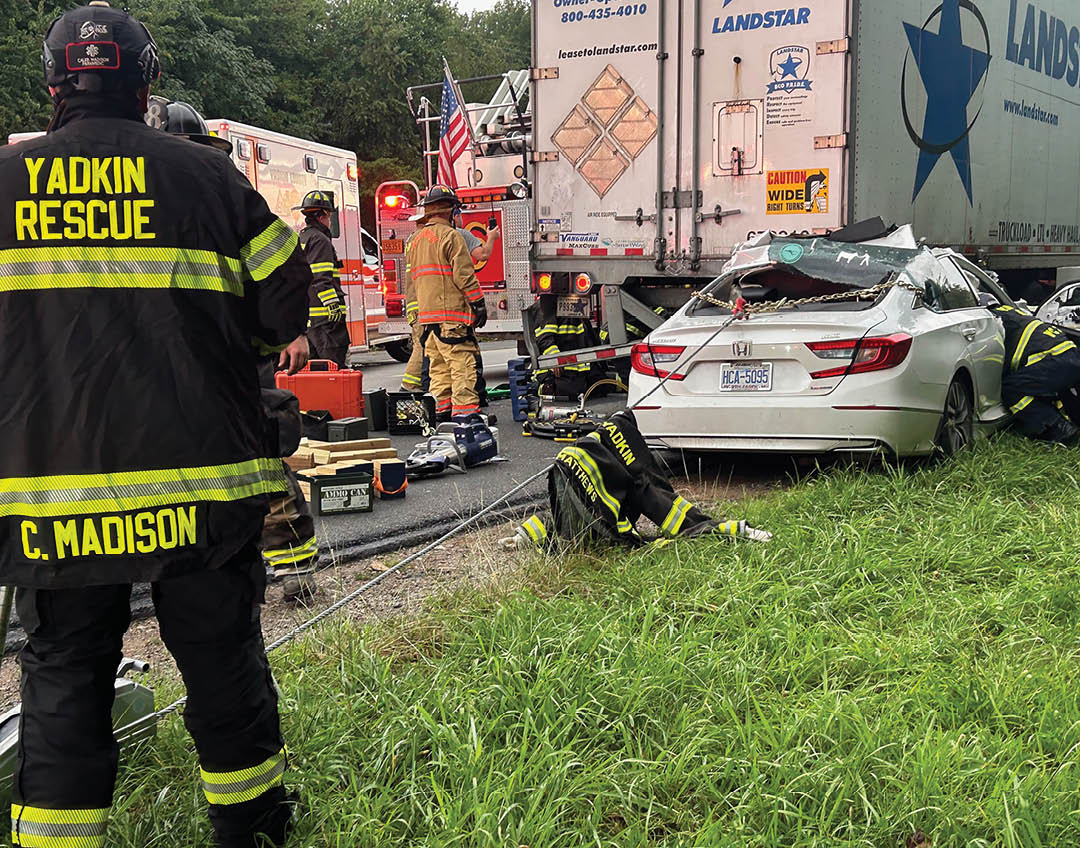
“We provide numerous services: medical first response, heavy and technical rescue, and back up
EMS transport. Probably the most visible events where the public sees us is at traffic accidents and
covering high school football games. We’re about more than running calls, though,” Hinshaw
said.
In addition to providing life saving, first aid and its rescue skills, the Rescue Squad also works to
educate the community about safety matters.
A community funded nonprofit, the Rescue Squad has been receiving about $190,000 each year, but costs
are nearly $250,000 to $300,000 to operate. So, to meet its budget, the organization holds
fundraisers.
Another operational challenge is that volunteers need to meet various state certifications, Hinshaw
said, essentially meaning they are unpaid professionals for the services they provide.
“It takes a specific type of individual, someone who can commit to acquiring the medical and
rescue skills needed to serve the community,” Hinshaw said.
Adding to that challenge is the small population of the area from which to draw volunteers and that
people these days, with their busy lives, are less likely to volunteer for organizations across the
board.
“Volunteerism is going the way of the dinosaur,” Hinshaw said.
Still, volunteering can be fulfilling. Hinshaw said that those who join the Rescue Squad can find
mentorship that can lead to careers in emergency services and public health.
“We have had numerous former members go on to leadership roles in other emergency agencies or to
high roles in health care,” he said. “Our senior members serve as mentors for our younger
folks.”
One of the Rescue Squad’s younger members, Camryn Long, was at a career choice crossroads. Given
the diverse background of the Rescue Squad’s membership, she was able to be aligned with James
Collins, who works for state emergency management. Long is now pursuing a college degree related to
emergency services and management.
As for his own 38 years with the Rescue Squad and his 31-year career as a physician assistant in Wake
Forest Baptist Medical Center’s emergency department, Hinshaw said inspiration came from real life
and television.
“When I was a kid back in the 1970s, I loved to watch ‘Emergency!’ which was about
firefighters and paramedics in Los Angeles,” he said.
Hinshaw also grew up on a farm, where life meant caring for animals and other tasks that built his
interest in wellness.
“It seemed a natural progression to pursue a path to a healthcare occupation,” he said.
“It takes a specific type of individual, someone who can commit to acquiring the medical
and rescue skills needed to serve the community.”
Jeff Hinshaw,
Chief of the Yadkin County Rescue Squad & EMS