Children have a voice in court with Guardian ad Litem programs
By Mike Danahey
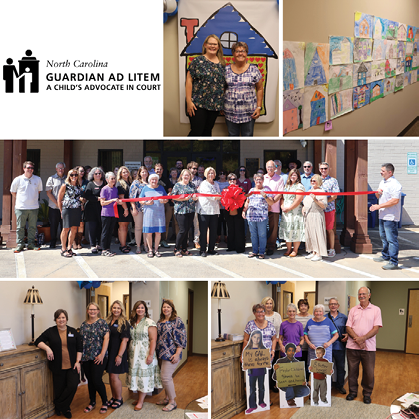
Guardian ad Litem (GAL) efforts across the country work with children who are involved with the
court system and are in foster care due to abuse and neglect.
Some states just have attorneys appointed. In North Carolina, a pilot GAL program launched in 1983
eventually led to the formation of programs involving volunteer advocates across the state to serve all
100 counties. That includes the GAL program started in 1994 in Judicial District Branch 34, which serves
Alleghany, Ashe, Wilkes and Yadkin counties.
“This program and its work are essential for our community now and in the future,” said
District 34 GAL program administrator Tamara Lakey.
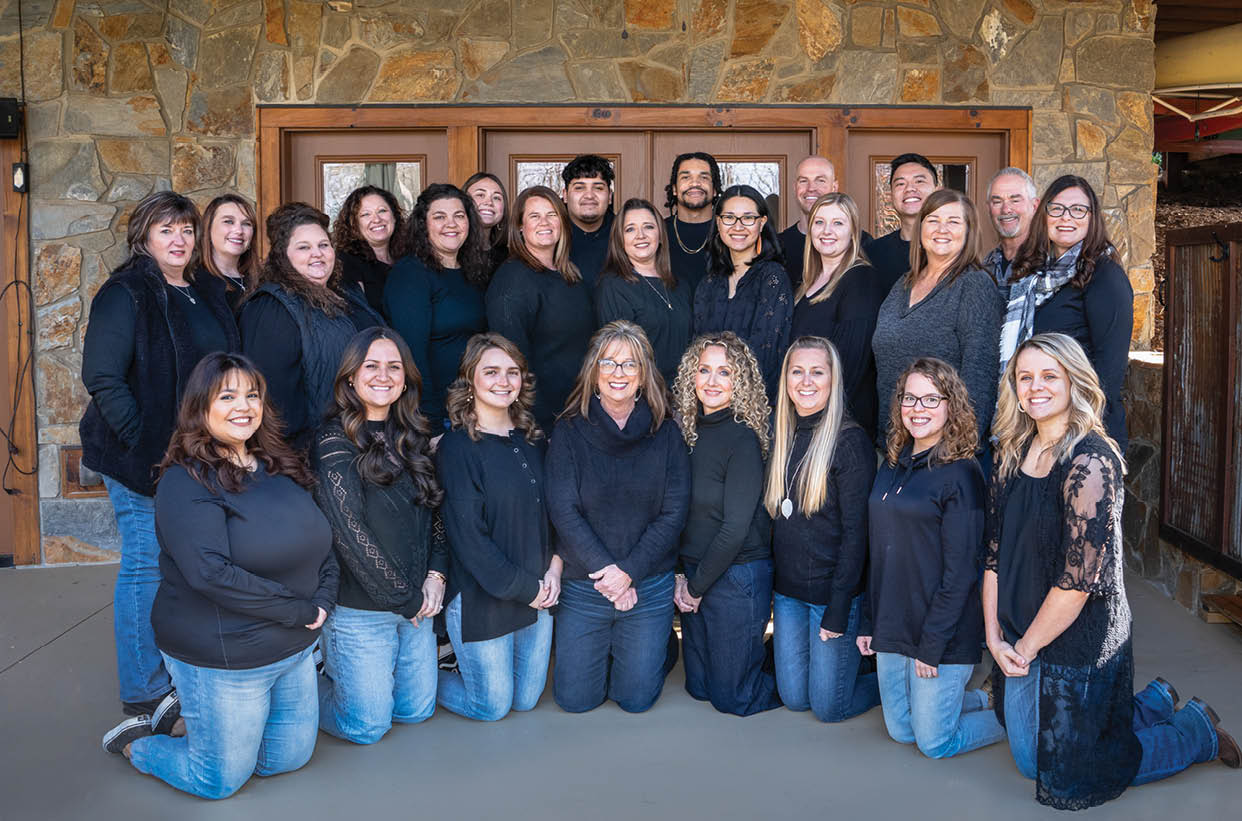
As administrator, Lakey oversees five supervisory staff, four attorneys, 77 GAL volunteers, and all
children’s cases in the four-county district. She reports to the NCGAL management team at the
administrative office in Raleigh.
Lakey also collaborates with the Chief District Court Judge, the four other District Court Judges and
their support staff, the four County Clerks of Superior Court and their staff, county agencies,
including four county DSS Directors and staff, four county law enforcement and sheriffs and the school
administration in all four counties.
“I also collaborate with any other agencies regarding foster home licensing agencies, group
homes, therapists/mental health agencies and any other agencies involved with the children in foster
care and their families,” Lakey said.
As of mid-October 2025, there were nearly 175 children being served by NCGAL in Wilkes County and more
than a combined 270 children in the four District 34 counties, Lakey said.
How the program works is that GAL volunteers, supervisors and attorneys work together as a team to
champion for children’s needs in court.
“I am amazed at all the fabulous work the GAL volunteers do not only to help a child, but also to
help shape our community,” Lakey said. “The volunteer is not an attorney and does not
represent the child or parents in the same way an attorney does, but rather provides an independent
recommendation to the court.”
Volunteers assist by conducting investigations. Investigations involve interviewing and observing a
child in various settings, including their safety placement, school/daycare, during visits with parents
and others and at other locations, as needed.
Volunteers Interview each parent and observe their interaction with the child during visits.
They talk with a child’s caregivers/safety placement providers (relatives, kinship non-relatives,
foster parents, group home staff, therapeutic caregivers, etc.) to learn the child’s needs,
day-to-day living, care and interests. Volunteers meet with social workers, a child’s teachers,
doctors, therapists and others to gather a comprehensive understanding of that child’s life and
circumstances.
“They also interview any other relevant agencies or individuals involved with the parents to
better understand the parents’ lives, circumstances, and any improvements toward regaining care
and custody of their child,” Lakey said. “And they request, gather and review various
records that are determined to be necessary to help determine the child’s needs and best
interest.”
Volunteers must be at least 18 years old, willing to complete extensive screening that includes
criminal background checks, a child abuse registry check and interviews, and have at least three
favorable references. Past that step, volunteers then must complete an initial 30-hour pre-service
training and observe at least two hours of Juvenile Department of Social Services Abuse, Neglect and
Dependency Court.
“The training is a hybrid of in-person or virtual group meetings once a week. And then weekly
online individual work in a Moodle room, which is like taking an online college course,” Lakey
said.
Volunteers also commit to advocate for a child until a safe and permanent home is established and court
involvement is no longer required. And they must have the ability to be objective, non-judgmental and
culturally competent.
“I love my job, not just because of interacting and advocating for children. It is working with
volunteers,” Lakey said. "The volunteers who become GAL advocates have a lot of
responsibility and work. The situations they encounter are serious. They are real-life superheroes in
that they donate their time, energy and skills to do this important work.
What makes GAL work rewarding is being able to see a child achieve a safe, permanent home, Lakey said.
“We celebrate those children who are able to return to their parents’ homes, if the parents
have made the improvements necessary to provide their children with a safe, stable, and nurturing
home,” Lakey said. “We also celebrate those children who are adopted by individuals who are
able to give them a forever home. And we celebrate those relatives and non-relative kinship caregivers
who assume custody or guardianship of the children giving them a safe, permanent home.”
Lakey noted that In Wilkes County, there are more than 60 children without a Volunteer Child Advocate
to be their voice and advocate for their best interest.
“You could be the voice for a child today, a voice for their wants, needs and best interest
– a voice that ultimately ensures they have a safe and permanent home to call their own,”
Lakey said.
If you are interested in learning more about becoming a NCGAL volunteer or would like to support
the program, visit the Facebook page for NC Guardian ad Litem-Alleghany, Ashe, Wilkes, Yadkin counties,
email [email protected] or go
online to
www.VolunteerForGAL.org.
Continue on page 18 for Wilkes Public Health Dental Clinic.
“I am amazed at all the fabulous work the GAL volunteers do not only to help a child, but
also to help shape our community.”
– Tamara Lakey,
GAL program administrator