Historic Stadium, Historic Response<
By Matt Beardmore
Early on New Year’s Day, the 136th Pasadena Tournament of Roses Parade took center stage as
marching bands and floats entertained an estimated crowd of 800,000 spectators who lined the 5 ½-mile
route.
Later that day at the 111th Rose Bowl Game, 90,000 roaring fans witnessed No. 6 Ohio State defeat
top-ranked Oregon 41-21 in a College Football Playoff Quarterfinal at Rose Bowl Stadium in Pasadena.
Less than a week later, though, those sounds of revelry and ringing in another year were replaced by
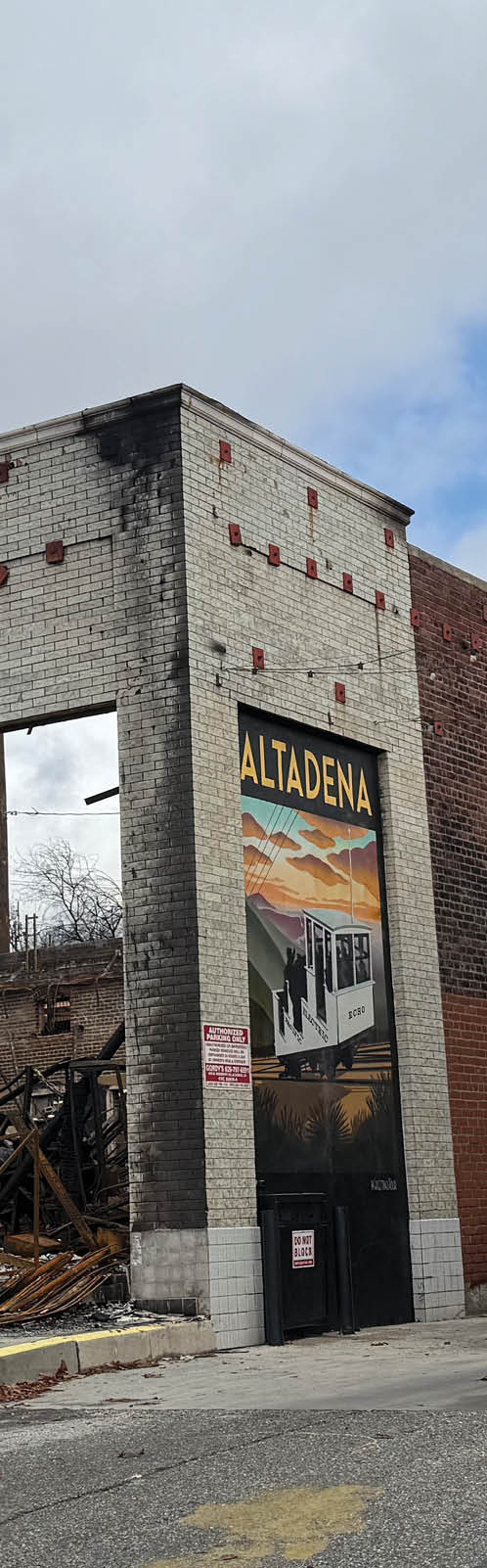
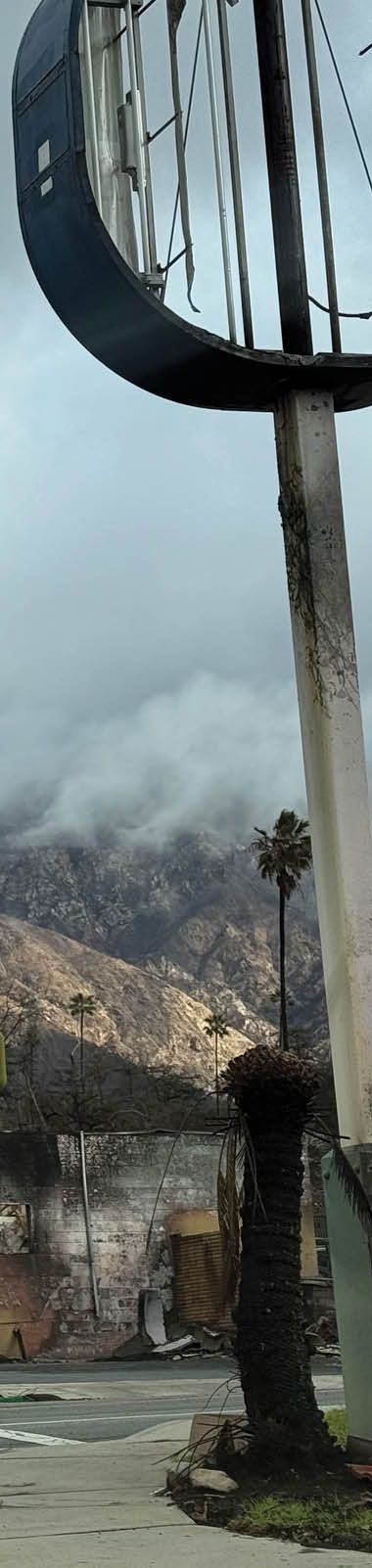
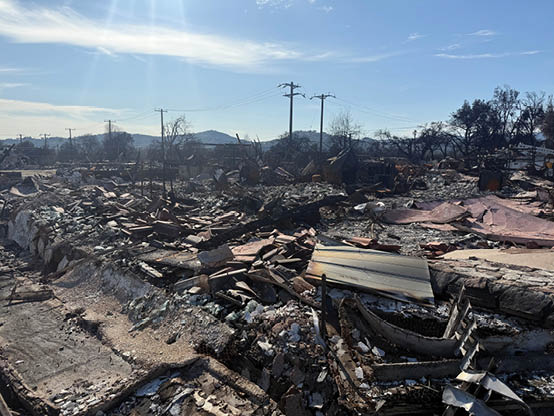
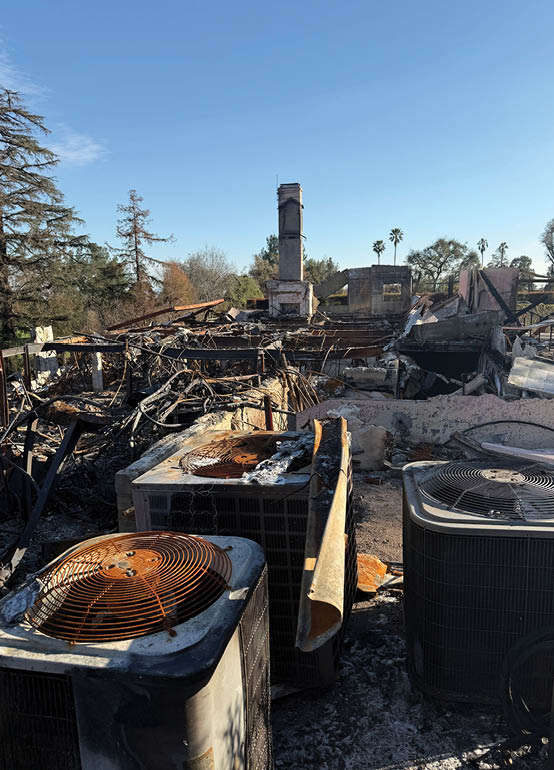
sirens from fire trucks and emergency personnel as the Eaton Fire – the second-most destructive
wildfire in California history – began its deadly burn in the nearby San Gabriel Mountains.
“The theme of the Rose Parade this year was ‘Best Day Ever!’” said Jens Weiden,
CEO of the Rose Bowl Operating Company, which is “responsive for the governance and stewardship of
the Rose Bowl Stadium and Brookside Golf Courses.” “Seven days later, some people had the
worst day. We still had paint on the field from the Rose Bowl game when the fire started. After the fire
started, we got a call within minutes from Pasadena Fire – they needed to use the Rose Bowl as
Central Command.”
While the Rose Bowl Stadium is widely known for hosting some of the world’s most well-known
sporting events – including the annual Rose Bowl game, five Super Bowls, World Cup soccer finals
for men and women, and soon-to-be three Summer Olympics (1932, 1984) as it will host the men’s and
women’s semifinal and final soccer matches at the 2028 Los Angeles Games – the 102-year-old
stadium is owned by the City of Pasadena and can serve a critical role during times of need. “The
City and Los Angeles County know that the Rose Bowl is an option whenever there is an emergency,”
Weiden said.
Designated as a National Historic Landmark, the Rose Bowl Stadium routinely hosts the Pasadena Police
and Fire Departments’ emergency preparedness training exercises along with the annual Federal
Aviation Administration emergency training exercise that dates back more than three decades. During
COVID, the Rose Bowl Stadium served as a mobile testing site and nearly 50 FEMA trailers were parked in
a lot there to combat the spread of the virus. However, the venue had never done anything at the scale
of serving as Central Command during the Eaton Fire, Weiden said.
As unique as this situation was, Weiden’s team tried to treat it as they would any event that
takes place at the Rose Bowl.
“When UCLA has a game here, we’re their host – same thing for a Rose Bowl game or a
concert,” he said. “In this scenario, our job was to be the host.”
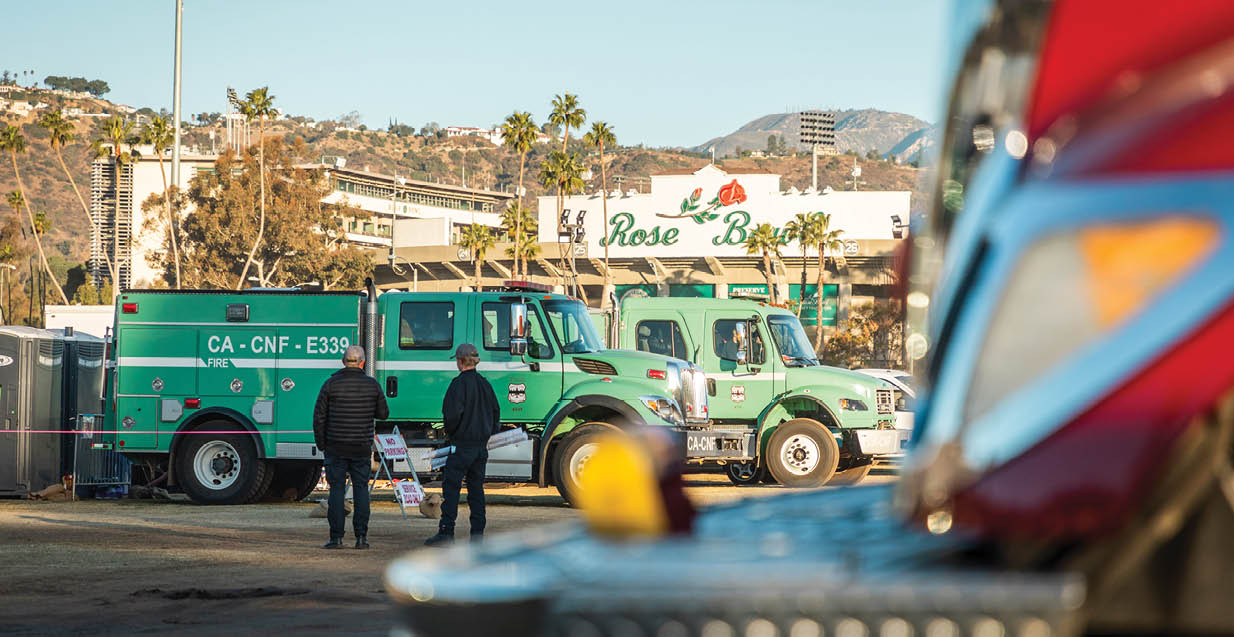
That job quickly grew in scope as Central Command – which started as just a few SUVs with maps on
the hoods and communications equipment in those vehicles – grew to approximately 4,000
firefighters and first responders from up and down the West Coast (including a crew that flew in from
Alaska) uniting at the Rose Bowl.
For nearly three weeks, Weiden’s team was onsite 24/7 as it leveraged its existing relationships
with the Pasadena Fire and Police Departments – which “was a huge benefit” as they
didn’t need to get to know their partners – and event planning expertise to “plan this
event for the first responders.”
This meant doing everything from ensuring that the restrooms were clean to preparing meeting rooms for
emergency response officials. The stadium was transformed into a mobile city as first responders were
provided with meals, sleeping quarters, showers, medical assistance, laundry and mail service, and even
a team of comfort dogs as a form of therapy, so they could recover and recharge before returning to the
firefight.
Every morning, the first responders’ daily briefing took place at the Court of Champions located
“underneath the world-famous Rose Bowl Stadium marquee.”
“I’m so happy this building could help the community in a different way,” Weiden
said. “I’m so proud of our team and the first responders. What I’ve taken from this
tragedy is this sense of community and sense of humanity.”
Although the fire has been extinguished and the Rose Bowl Stadium team is focused on its upcoming
events schedule, which includes the Rose Bowl Flea Market on the second Sunday of every month, six
matches during the inaugural FIFA Club World Cup in June, and the Oasis Live ’25 World Tour on
September 6-7, rebuilding the community and supporting the seven Rose Bowl Stadium staff who lost their
homes during the fire remains a priority.
Before the flames were even distinguished, the Rose Bowl Operating Company and its Pasadena music
festival partners Cruel World, Just Like Heaven, and Head in The Clouds, pledged a combined $250,000 to
the Pasadena Foundation’s Eaton Fire Relief and Recovery Fund.
On February 1, 16,000 emergency personnel and their families were treated to a free concert at the Rose
Bowl with an all-star lineup that included Jelly Roll, Public Enemy, Marshmello, Nate Smith, Lainey
Wilson, and Shinedown. The Rose Bowl Stadium and its partner Live Nation produced the concert as a way
to thank those heroes who put themselves in harm’s way to protect the community.
“We were happy to do it,” Weiden said. “We’re part of this community that has
helped us be successful. It is incumbent upon us to invest back. We won’t forget and we
won’t just move on.”
To learn how to donate to the Pasadena Foundation’s Eaton Fire Relief & Recovery Fund, please
visit
pasadenacf.org/funds/eaton-fire-relief-recovery-fund/.
“We were happy to do it. We’re part of this community that has helped us be
successful. It is incumbent upon us to invest back.”