Positive energy
South Carolina looks to meet the energy
needs of an increasing population
By Mike Danahey
When it comes to energy, State Senators Tom Davis (R) and Russell Ott (D) both feel South
Carolina is at a crossroads.
“Our state faces surging electricity demand driven by population growth, advanced manufacturing
and data center expansion,” Davis told the Charleston City Paper in November.
Toward meeting those energy needs, Davis said that nuclear power will continue to play a key role.
Of utmost importance is completing the two nuclear reactors at V.C. Summer in Fairfield County with
private capital and at private risk, Davis said. Which, in addition to providing power, will also create
high tech jobs and be a boon to the Midlands economy.
“Nearly half of our energy in South Carolina already comes from nuclear sources, so bringing
those reactors online in a transparent and responsible way is certainly something worth looking
at,” Ott said.
Ott noted prior plans to build the two nuclear reactors were abandoned by utility companies in 2017,
leaving consumers footing a hefty bill.
“Public faith in our ability to meet energy needs in an affordable and reliable way was
shattered,” Ott said. “By implementing reforms to increase transparency and protect
ratepayers, we have slowly been able to rebuild that trust and, having served on the House Utility
Ratepayer Protection Committee, I take that responsibility very seriously.”
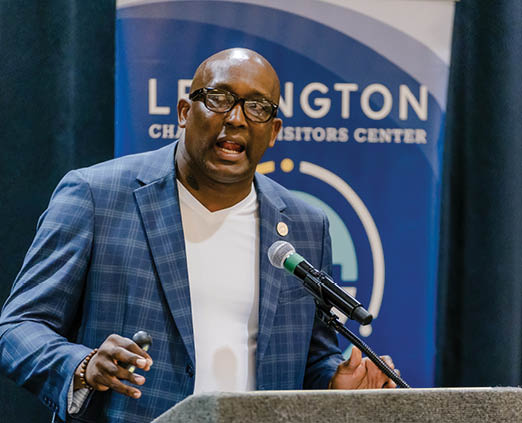
Bob Paulling, CEO of the Mid-Carolina Electric Cooperative, located in Lexington, said the objective is
to prepare for South Carolina’s growing population.
“My primary concern is ensuring we have enough power available during periods of extreme heat or
cold,” Paulling said. “South Carolina experienced rolling blackouts in December 2022, and in
my view, it’s not a question of if it will happen again, but when. We haven’t added any new
24/7, ‘always available’ generation in South Carolina since 2008, yet our population has
grown by 20% — about 1.5 million people — along with significant economic development across
the state.
“I’m not opposed to data centers, but I am opposed to two things: first, Mid-Carolina
Electric Cooperative members being responsible for the cost of transmission and generation needed to
serve these facilities; and second, and more importantly, the risk that these large loads could
contribute to rolling blackouts. Rolling blackouts are unpredictable and can quickly become extended
outages, which can be devastating for homeowners and businesses — not only in terms of
inconvenience, but also property damage and, in extreme cases, threats to human life.”
At the same time, it is important that large-energy users, sometimes referred to as
“hyperscalers,” pay for the new energy generation that their business models require, Davis
said.
“In other words, have them pay for their generation needs, rather than having the costs of new
generation rolled into the rate base and paid for by all utility customers,” Davis said.
“The Santee Cooper-Brookfield deal to complete the two reactors at V.C. Summer is an excellent
example of how to structure new generation deals that align costs of generation and the large-scale
users that create the need for that new generation.”
As such, Davis hopes legislators change state law so that private-sector financed generation like the
one at V.C.Summer can be replicated in the future.
“For me, energy policy has always come down to three major components — affordability,
reliability and renewability. Providing South Carolina homes and businesses with reliable energy at a
rate they can afford is job one,” Ott said. “As we move forward, I would like to find ways
to increase the use of cleaner and more renewable energy sources to help save money and protect our
environment. I hope during the next legislative session we will be able to give some more attention to
energy efficiency. I think we can help save South Carolina businesses and homeowners a lot of money if
we can reduce the amount of energy it takes to do the same job. Greater efficiency can also limit, to
the greatest extent possible, how much new energy generation we need to pursue in the years and decades
to come.”
Toward those goals, Ott said that in 2025, lawmakers passed a comprehensive energy bill that, among
other things, allows for the construction of a natural gas power plant at the Canady’s site near
Walterboro in Colleton County that is expected to generate enough power for nearly 500,000 homes.
Davis mentioned that in mid-November, First Solar, Inc., a leading American photovoltaic solar and
manufacturing company, announced it would be growing its South Carolina footprint with a new production
facility in Cherokee County.
The company expects to spend approximately $330 million to establish the new facility, which is
forecast to create more than 600 new jobs, according to a news release. The facility is expected to open
sometime during the second half of 2026.
Data farms got a lot of attention in the General Assembly during 2025 as they require so much power and
water.
“I think we have to remember that all of us are contributing to the need for these kinds of
operations. We want our phones, our computers, and our streaming devices to deliver constant
entertainment and we want reliable access,” Ott said. “We need to acknowledge that modern
life simply demands more energy and that includes data farms. By working with utilities to shore up our
power grid, bring new energy generation online and increase energy efficiency, we can balance the needs
of residential and commercial customers.”
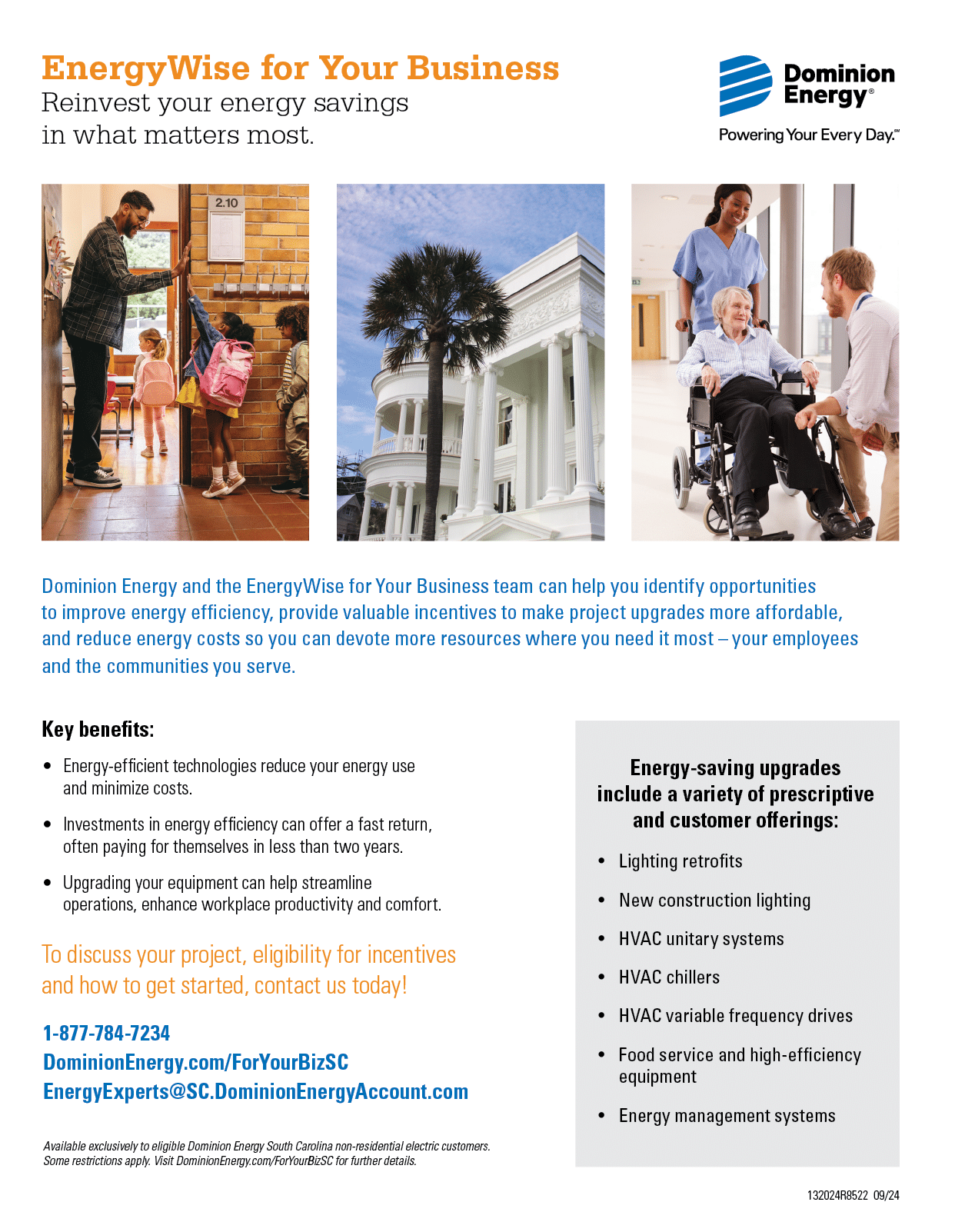
Officials from electric services company Dominion Energy are also keeping an eye on that efficiency.
“Dominion Energy is committed to providing the reliable, affordable and increasingly clean energy
that powers our customers every day,” said Jonathan Yarborough, director of government affairs and
economic development for Dominion Energy SC.
He continued, “guided by what is in the best interest of our customers and South Carolina’s
energy future, an all-of-the-above approach to generation will allow us to meet customer demand reliably
in one of the nation’s fastest growing states. Natural gas generation, such as our planned Canadys
facility in Colleton County that will be jointly owned with Santee Cooper, will play a key role in
supporting additional non-dispatchable, intermittent renewable resources like solar.”
All told, Ott said, “It’s exciting to live in a state that is attracting so much investment
and new economic opportunity.”
“While that puts a strain on our resources, I think South Carolina can be a national leader on
finding affordable and reliable ways to meet that demand while still protecting our environment and our
quality of life,” Ott said.