HISTORICAL TOUR OF Lewisville and Clemmons
Welcome to the Lewisville-Clemmons History Tour! Come along and we will explore the many places,
people, and stories that have impacted this area for hundreds of years. Bring this tour to life and
experience the stops for yourself as you head around town.
THE TOWN OF LEWISVILLE
Great Philadelphia Wagon Road (Shallowford Square, Lewisville-Vienna Road): Marks the
18th-century colonial route from Philadelphia to Georgia, passing through Lewisville en route to Shallow
Ford on the Yadkin River; the roadbed is 1,100 feet west of the marker.
Shallow Ford (Shallow Ford Road, near Yadkin River): Commemorates the colonial river
crossing used by Moravian settlers and British troops under Lord Cornwallis in 1781
Lewis C. Laugenour House (6495 Shallowford Road): Built ca. 1860 by Lewis Case
Laugenour, the town’s namesake and early benefactor; exemplifies Greek Revival architecture in
Forsyth County.
Vogler-Reynolds House (Near Reynolds Road): Late 19th-century homestead of the Vogler
family; from 1904–1961, home and nursery business of L.A. Reynolds, a prominent Forsyth County
nurseryman.
Jones Grocery Store (8950 Shallowford Road): Established 1875 by Joseph Spurgeon
Jones; operated for a century by three generations as a general store and post office site in the Little
Yadkin Township.
Shiloh Lutheran Church (703 Lewisville-Vienna Road): Founded 1777 as the German Church
Beyond Muddy Creek; renamed Shiloh ca. 1860; oldest congregation in Lewisville, with present sanctuary
from 1883.
Concord United Methodist Church (8955 Concord Church Road): Established 1782 as
Waggoner’s Chapel, the oldest Methodist congregation in Forsyth County; present sanctuary built
1908.
Lewisville United Methodist Church (6290 Shallowford Road): Founded 1878 by Methodists
from Brookstown and Sharon; original one-room building dedicated 1882, later replaced by a three-story
brick structure.
Lewisville Baptist Church (125 Lewisville-Clemmons Road): Organized 1881; original
wooden building with steeple erected 1882 on the village’s highest knoll; rebuilt after 1936
lightning strike.
Methodist Church Parsonage (Near Shallowford Road): Purchased 1884 as the Wesley
Vogler house for the Forsyth Circuit; served 12 western Forsyth churches before the Lewisville Charge
formed in 1901.
New Hope AME Zion Church (Near Shallowford Road): Oldest continuing African Methodist
Episcopal Zion congregation in Lewisville Township; among the earliest AME Zion churches in Forsyth
County.
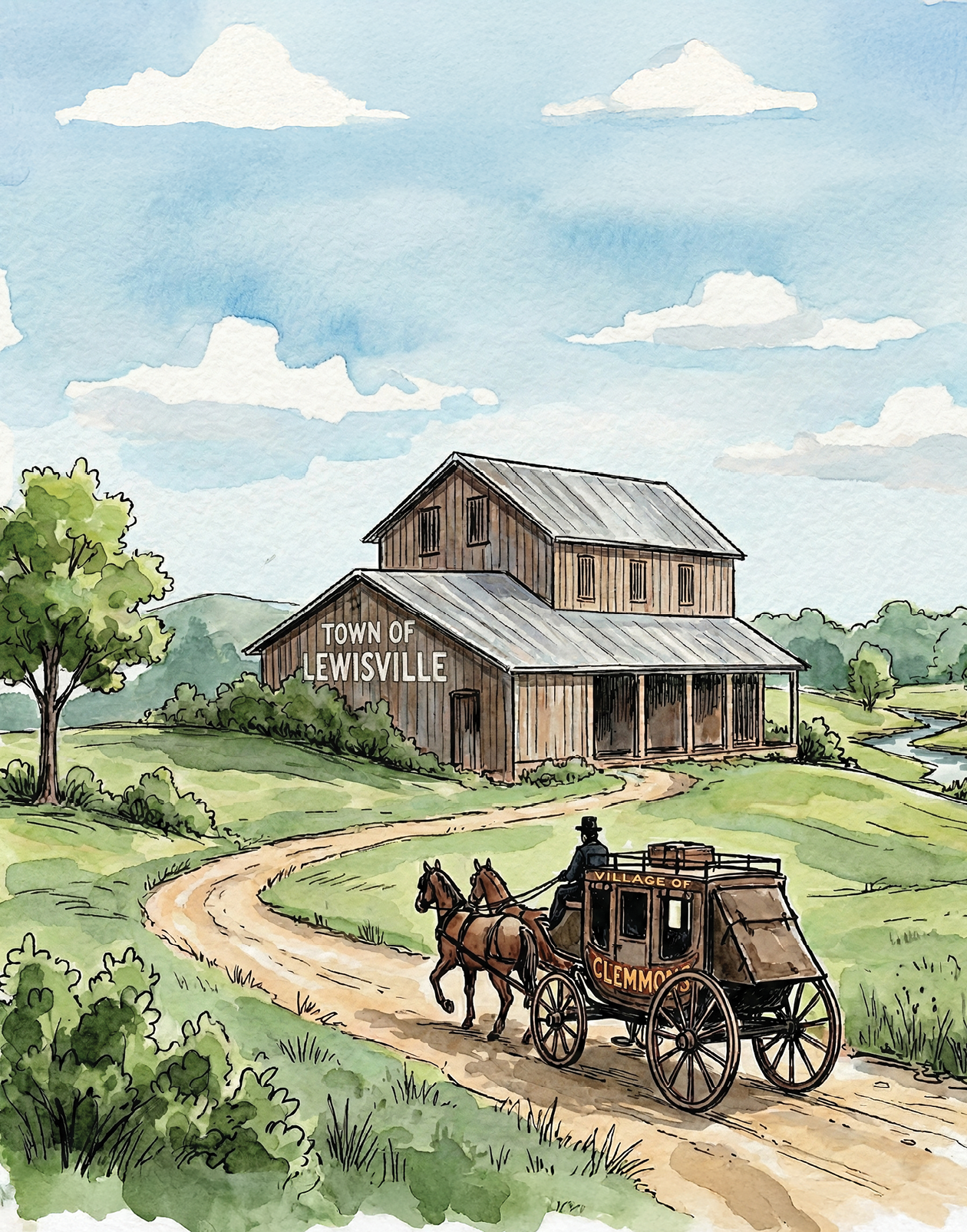
Lewisville Roller Mill (Near Shallowford Road): Built 1910 by the J.P. Sprinkle
family; operated 58 years by Fielden Hale Jennings as the village’s largest employer; now a
variety of business locations, the oldest commercial building in town.
Site of Lewisville Academy (Near Shallowford Road): Forsyth County’s first
public high school, established 1901; consolidated into the county system in 1907; site hosted three
subsequent schools.
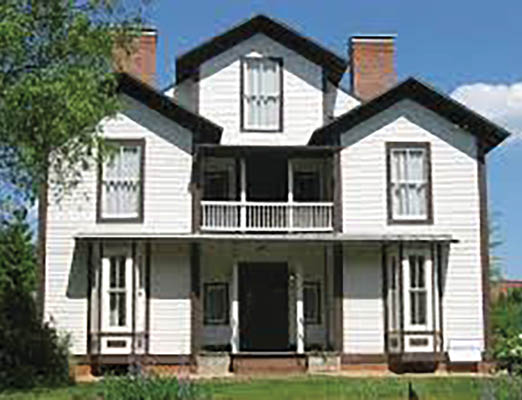
George Elias Nissen House (c. 1876, 213 Arrow Leaf Drive): A restored Victorian-era
home owned by the Lewisville Historical Society, this elegant country residence now serves as an event
venue with heritage gardens. Built for a prominent local family, it exemplifies post-Civil War
architecture and hosts tours, weddings, and educational programs on Lewisville’s 19th-century
social life.
Nissen Wagon Works (c. 1850s–1880s, near Main Street): One of Lewisville’s
industrial landmarks, this site highlights the town’s role in 19th-century wagon manufacturing,
founded by the Nissen family (ancestors of the trampoline inventor). Though remnants are limited,
it’s marked and featured in local heritage tours as a symbol of the area’s agrarian economy
and craftsmanship.
THE VILLAGE OF Clemmons
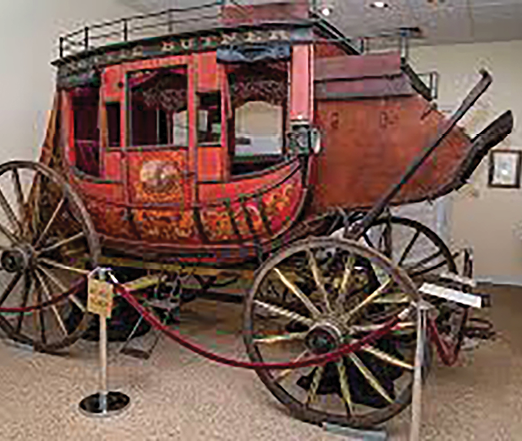
Hattie Butner Stagecoach (1872, on display at Village Hall, 3715 Clemmons Road):
This nine-passenger Concord coach, built by the Abbot-Downing Company for stagecoach operator Edwin T.
Clemmons and named for his wife Harriet “Hattie” Butner, was a vital link in regional travel
before railroads. Donated to the Wachovia Historical Society and loaned to the village in 1993, it
was restored in 1995 and serves as Clemmons’ official symbol, commemorating the area’s
stagecoach era.
Idols Dam Power Station (Southwest of Clemmons, near Yadkin River): Erected 1898, it
powered early electric manufacturing in Forsyth County, marking Clemmons’ entry into the
industrial era.
Clemmons Mill Honors the 1920 gristmill by L.C. Hobson, Clemmons’ oldest
continuously operating business, serving as a community backbone for over a century.
Philip and Johanna Hoehns (Hanes) House (Forsyth County Local Historic Landmark #133,
3550 Middlebrook Drive): Built 1798, a two-and-a-half-story Flemish-bond brick Georgian dwelling by
Moravian farmer-distiller Philip Hoehns. Designated November 9, 2015; reflects rural prosperity
rivaling urban Salem architecture.
Peter Clemmons House (c. 1805, 3736 Clemmons Road): Georgian/Federal-style home of
village founder Peter Clemmons, serving as a tavern, inn, store, and Methodist meeting house.
Clemmons Moravian Church (c. 1890s–1907, 6745 Clemmons Road): Founded via Edwin
T. Clemmons’ 1896 bequest; anchors Moravian heritage with original sanctuary and grounds for
community events.
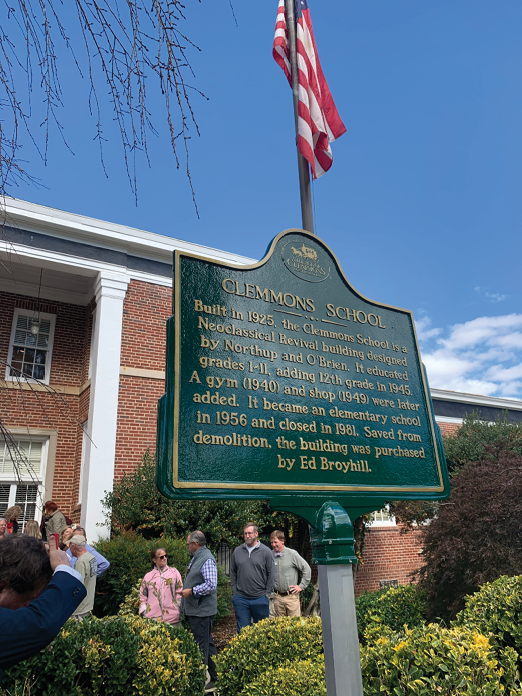
The Historic Broyhill c. 1925 this property was once the Old Clemmons School,
educating students from 1925-1981. Ed Broyhill purchased and renovated the property that is now The
Historic Broyhill, serving as the hub of business and community in Clemmons - housing dozens of business
offices and community events.