How Veteran Talent Powers Regional Growth
By Angela Harrington
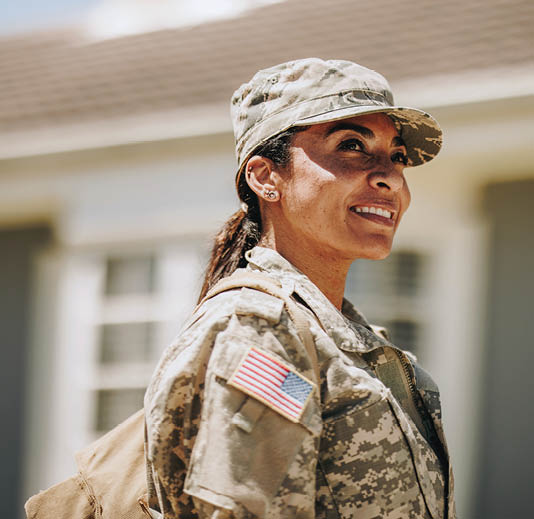
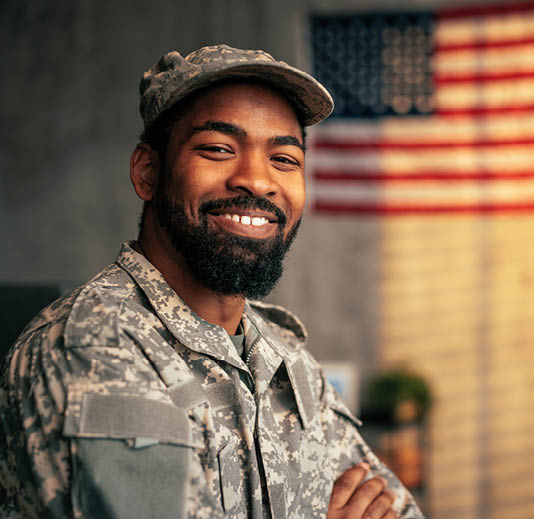
The skills and training veterans receive while serving in the United States military make them
excellent candidates for a wide variety of employment opportunities when returning to civilian life.
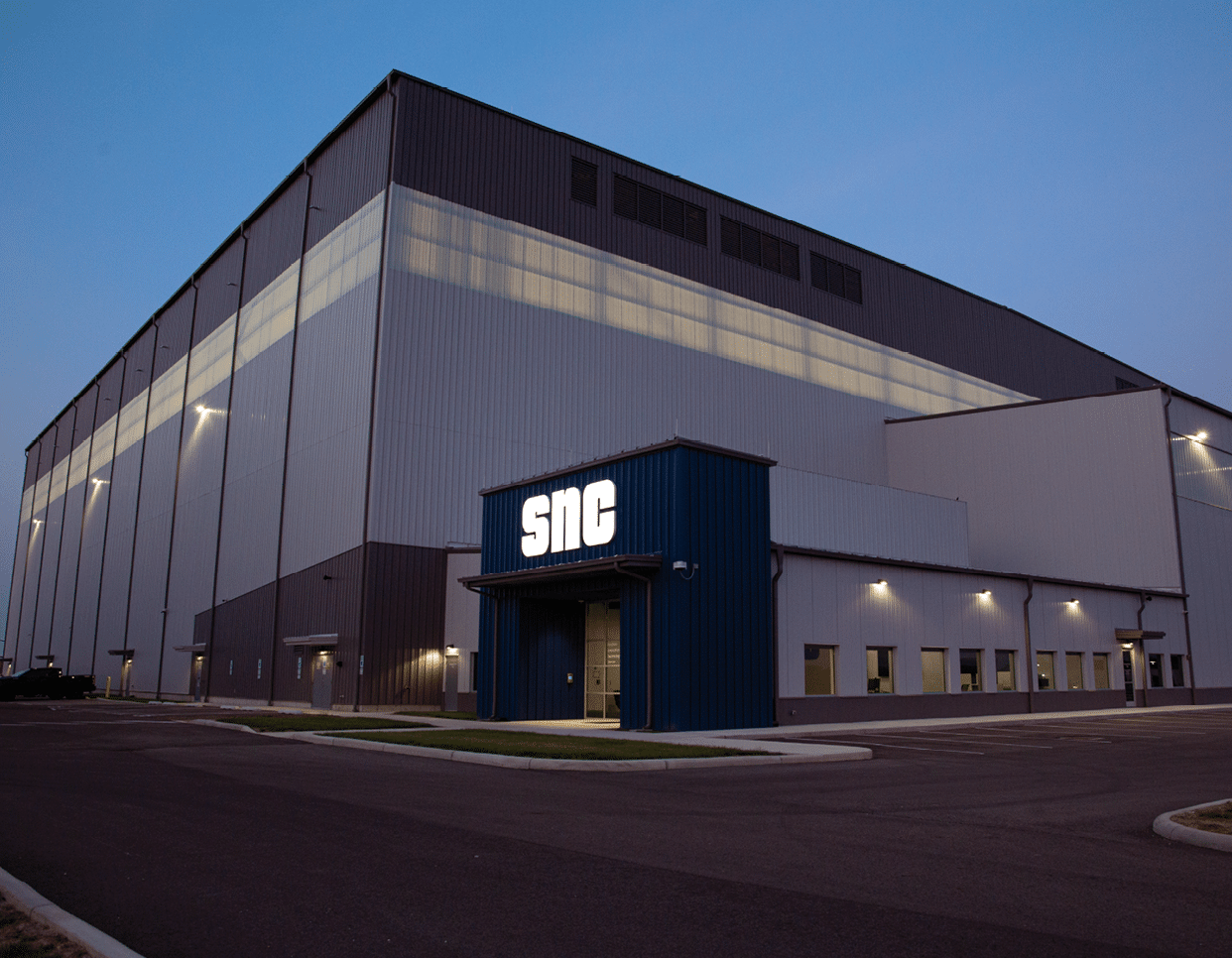
Employers like aerospace and defense contractor SNC know that veterans can rapidly adapt and solve
problems while navigating complex high-stakes environments. Their technical skillsets, including
aerospace, avionics, logistics, and systems integration, are highly desirable assets for companies
like SNC.
SNC uses a multi-channel approach to attract and engage military talent across the country and in the
Dayton region through its Military Fellowship Program (MFP) and other external organizations and
workforce initiatives. The MFP is SNC’s flagship veteran talent pipeline, offering active-duty
service members the ability to complete up to a six-month civilian fellowship before separating from the
military. Over the last five years, SNC has brought on over 180 service members through the MFP. Roughly
30 percent of SNC’s company-wide workforce are veterans and in the Ohio offices, as much as 40
percent. Through coordination with SkillBridge and Hiring Our Heroes, both nationally recognized
Department of Defense initiatives that fall under the MFP umbrella, as well as JobsOhio, Strategic Ohio
Council for Higher Education, career fairs, transition events and partnerships with Wright-Patterson Air
Force Base, SNC has created all the right connections to help veterans transition to the next level of
their careers. In recognition of SNC’s sustained commitment to veteran hiring, retention and
professional development, it has earned the U.S. Department of Labor HIRE Vets Gold Award three years in
a row.
"As a company, SNC is deeply committed to supporting those who have served our nation with
meaningful career opportunities in Dayton and across the U.S.," explained U.S. Air Force Colonel,
ret. and Dayton, Ohio, Site Executive Mark Williams. “We're proud that 40 percent of our Ohio
workforce is composed of veterans and to underscore the invaluable skills and dedication they bring to
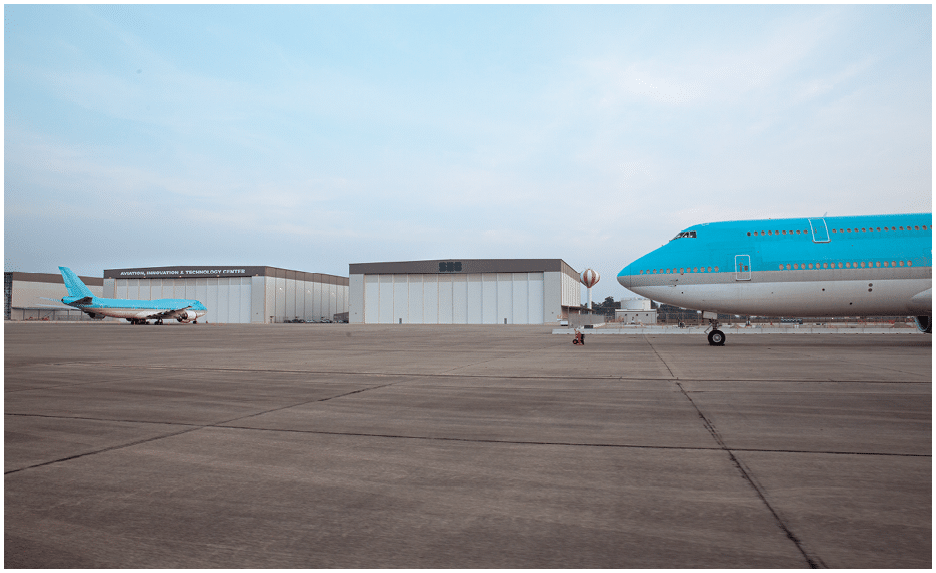
every area of our organization. In fact, when planning substantial growth, SNC chose to expand its
footprint here in Dayton due in part to the region’s highly skilled workforce, thousands of whom
are veterans.”
Veterans strengthen SNC with mission-driven focus, technical expertise and leadership under pressure.
Teamwork, a safety and compliance culture, security readiness and commitment to growth are all skills
that directly translate into key roles in business, aircraft maintenance, engineering, cybersecurity,
program management, supply chain and operations support.
There are many organizations that SNC has historically worked with in onboarding veterans such as Honor
Foundation, Special Operators Transition Foundation, Wounded Warrior Project, Three Rangers Foundation,
Warrior Care Program, Warriors to Work and Work for Warriors. Others can utilize these resources as
well. If your business or company needs employees with diverse skillsets and a serious work ethic, reach
out to these programs and agencies for additional information.
How Businesses Are Adapting to New Work Models
By Angela Harrington
Office and industrial space serve the business, manufacturing and industrial work forces in
their daily operations and every operation has different needs.
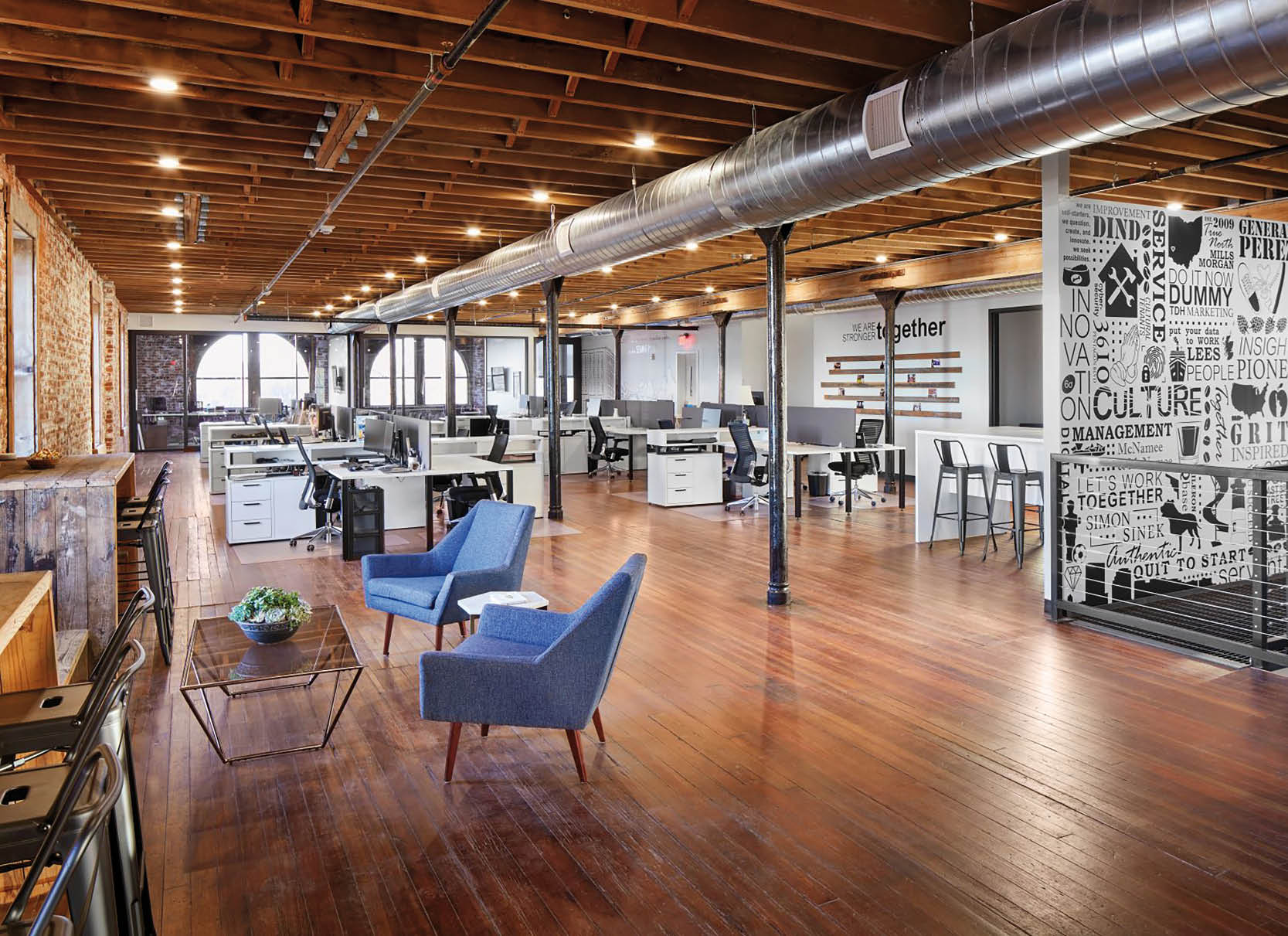
In a post-pandemic environment, the desires of those who utilize these workspaces have changed. Prior
to COVID-19, most business was conducted in centralized locations. Now employees have new expectations
of the environment in which they will spend many of their daytime hours. With many employees having
returned to communal workspaces, these environments are now being tailored to diverse and changing
expectations.
Demand for industrial space, particularly larger big box distribution centers, remains strong due to
the growth of e-commerce. Yet smaller industrial/office flex spaces are in high demand, as well,
with a preference for newer, state-of-the-art buildings. Tenants are looking for office spaces with more
amenities, higher ceilings and an “old look, new feel” aesthetic.
However, there has been a limited amount of new inventory on the market to satisfy those demands,
according to Mark Fornes, President of Mark Fornes Realty.
“There is always a trend toward newer-is-better in the way of buildings but there is not enough
newer product to fulfill that demand,” he said. “So there will be some more new product
going up and being built, especially in the warehouse sector and the office flex market.”
Fornes said it is typically less expensive to build out new than it is to demo and rebuild.
“In an open, speculative building, you can pretty much lay out the office space the way you want
it,” he said. “It’s more flexible.”
The Austin Business Park in Miamisburg is a location Mark Fornes Realty has built up with eight
speculative office warehouse buildings, all of which have been leased.
“We have another one coming online in the spring of 2026,” he added.
The days of fully in-office or fully remote work have now given way to the hybrid work model.
Technology and cultural adjustments are being made and office space is being redesigned as a
destination.
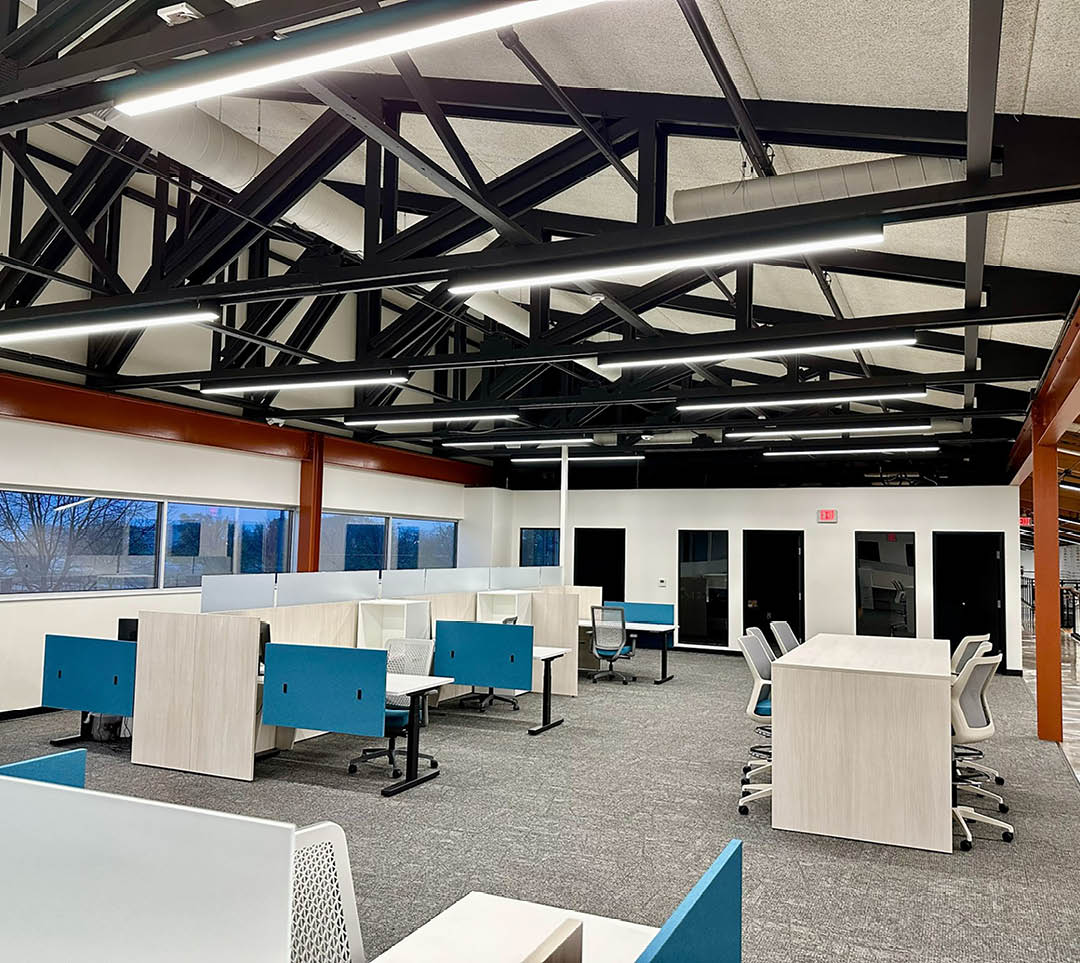
Jason Woodard, Founder of Woodard Development, said, “We do a lot of office renovation and
development and it is definitely changing. In years past, there was a shift to open areas and
collaborative workspaces. Now we are starting to see a shift back toward a mix of open and collaborative
workspaces with private office spaces.”
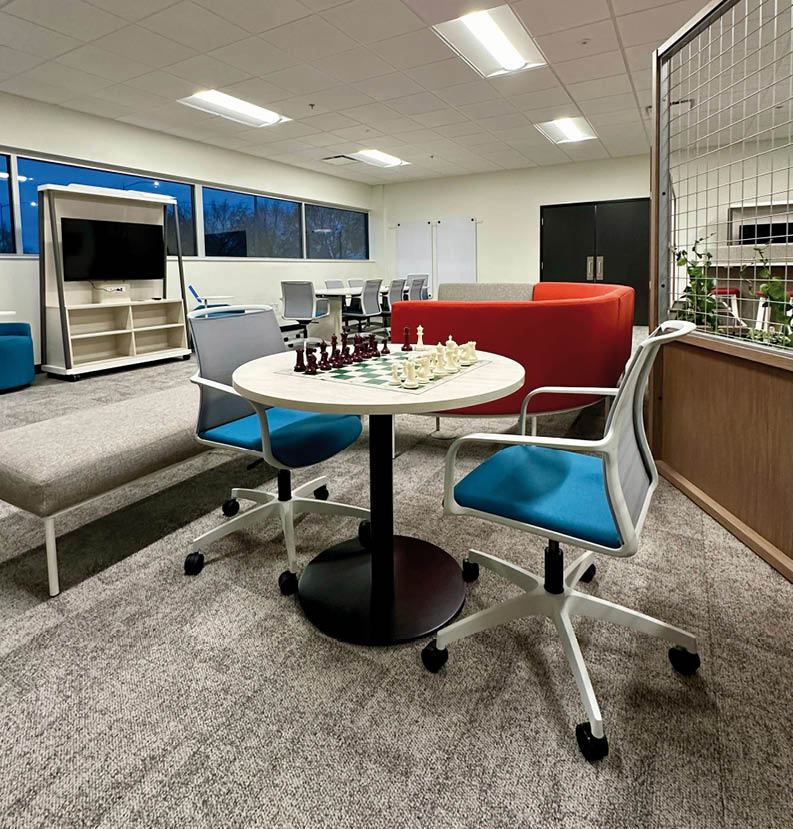
Many people in the younger workforce are looking for intentional spaces such as game room-style areas,
larger break rooms and cafeteria or café areas that are all multifunctional, according to Woodard. A new
trend is the one- or two-person booth-type space, with technology-enabled features where employees can
work independently or with another person.
As workspaces are continuing to evolve, more focus will be put toward creating spaces that fit the
needs and desires of the young employees who will use them. Whether they are there everyday or just a
few days a week, the office of tomorrow will not be just a place to go to work. It will be a destination
of modern innovation.